January 23, 2026
Hy-Line International Celebrates 90 Years
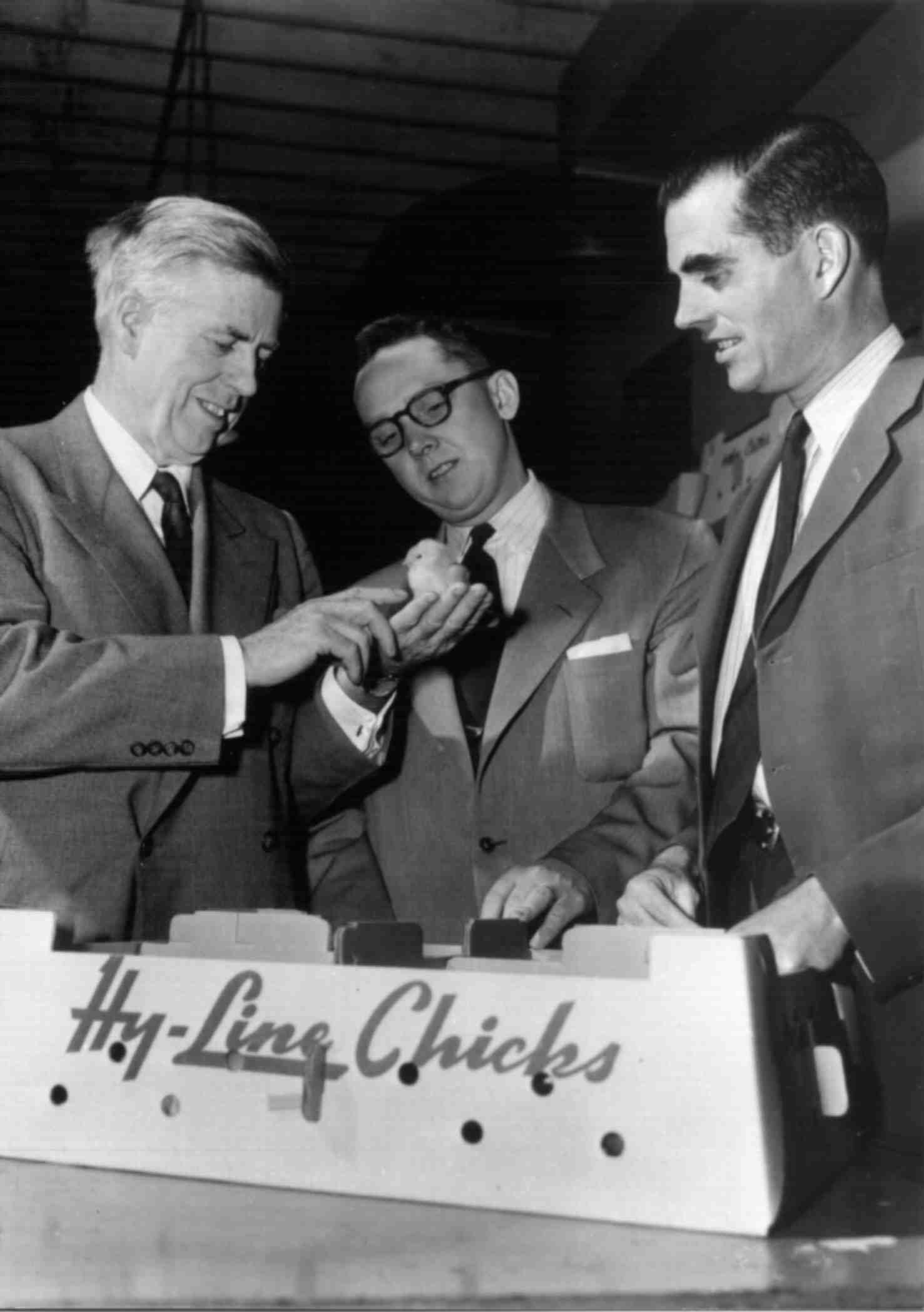
The story of Hy-Line International begins at the turn of the 20th century, when a bright young man named Henry A. Wallace started experimenting with corn plants on his family’s farm in Iowa. These early, modest attempts at genetic improvement planted the seeds of a dream—one that would eventually launch a company and revolutionize agriculture through the powerful principles of hybridization.
Henry A. Wallace was a man with a vision: to harness the power of hybrid genetics to feed the world. His passion for agriculture was sparked during childhood through encounters with the renowned horticulturist George Washington Carver, who stayed with the Wallace family while pursuing postgraduate work at Iowa State College. Carver, a pioneering scientist and son of slaves, befriended young Henry and taught him about plants during their walks together. These formative experiences inspired Wallace to pursue agricultural studies at Iowa State College.
After graduating, Wallace began experimenting with corn crosses on five acres of his family’s land near the western edge of Des Moines. Drawing on lessons in plant genetics learned from Carver, Wallace developed hybridized strains of corn—an innovation that became the cornerstone of Iowa row crop agriculture. From these beginnings, he founded Pioneer Hi-Bred Corn Company in 1926 and introduced the first commercial hybrid corn, which became wildly successful. The company was ultimately sold three-quarters of a century later to DuPont for $10 billion.
Building on this success, Wallace founded Hy-Line, dedicated to applying hybridization principles to poultry genetics. This groundbreaking approach transformed the egg industry and continues to shape global food production today.
Henry A. Wallace’s talents extended far beyond corn breeding. His intellect and leadership earned him national recognition, and in 1933, President Franklin D. Roosevelt appointed him U.S. Secretary of Agriculture. After seven years in that role, Wallace served as Vice President of the United States from 1941 to early 1945, and later as Secretary of Commerce under President Truman.
Wallace stayed true to his roots in agriculture during his public service. During an official visit to China as Vice President, Wallace donated melon seeds that produced a local cultivar known today as the Bailan melon, sometimes called “Wallace Melons.” He also appointed a young Iowa agronomist, Norman Borlaug, to an agricultural station in Mexico—a decision that ultimately sparked the Green Revolution, saving billions of people around the world from starvation and earning Borlaug the 1970 Nobel Peace Prize.
The Founding of Hy-Line
While Wallace guided agricultural policy from Washington, his family continued to grow Pioneer and recognized the potential to improve egg production using the same breeding principles that had revolutionized corn. After eight years of research, Hy-Line was officially established in 1936, led by Wallace’s son, Henry B. Wallace.
The first Hy-Line layer chicks were sold in 1940—40,000 commercial layers hatched and distributed from February to May. News of their productivity spread quickly, and Hy-Line began selecting franchise hatcheries to distribute chicks across the United States. Growth was exponential: from 40,000 chicks in 1940 to over 70 million by 1960, with sales expanding to Canada, Europe, and Latin America.
Innovation That Endures
Hy-Line pioneered genetic innovations that remain foundational today. Early breakthroughs included blood typing as a genetic marker to improve livability and predict productive crosses. Today, advanced molecular DNA techniques allow precise selection for traits such as egg production, feed efficiency, and disease resistance.
Field testing has always been a cornerstone of Hy-Line’s success. Hybrid crosses were—and still are—evaluated under diverse conditions, both in cages and on the floor, with meticulous records on egg production, livability, feed conversion, egg quality, and more. Today, Hy-Line’s global genetic evaluation program uses robust statistical models to analyze hundreds of millions of data points annually.
Egg quality was recognized early as a heritable trait. By the late 1940s, Hy-Line’s egg quality lab was breaking 200,000 eggs annually to measure Haugh units and assess shape, weight, and color. Today, Hy-Line’s laboratories test over one million eggs each year using state-of-the-art technology.
A Legacy of Leadership
Henry B. Wallace not only served as Hy-Line’s president but also led its genetic development program, assembling a team of experts in genetics, nutrition, veterinary medicine, and poultry husbandry. The Wallace family’s legacy—and its impact on global agriculture—cannot be overstated. Their vision and leadership built businesses that not only achieved commercial success but also helped nourish the world. Ninety years later, Hy-Line continues to honor that legacy through innovation, science, and a commitment to feeding a growing global population.